Welcome: Pure Powder Coating


bruce@aabindustrygroup.com +86 13951823978
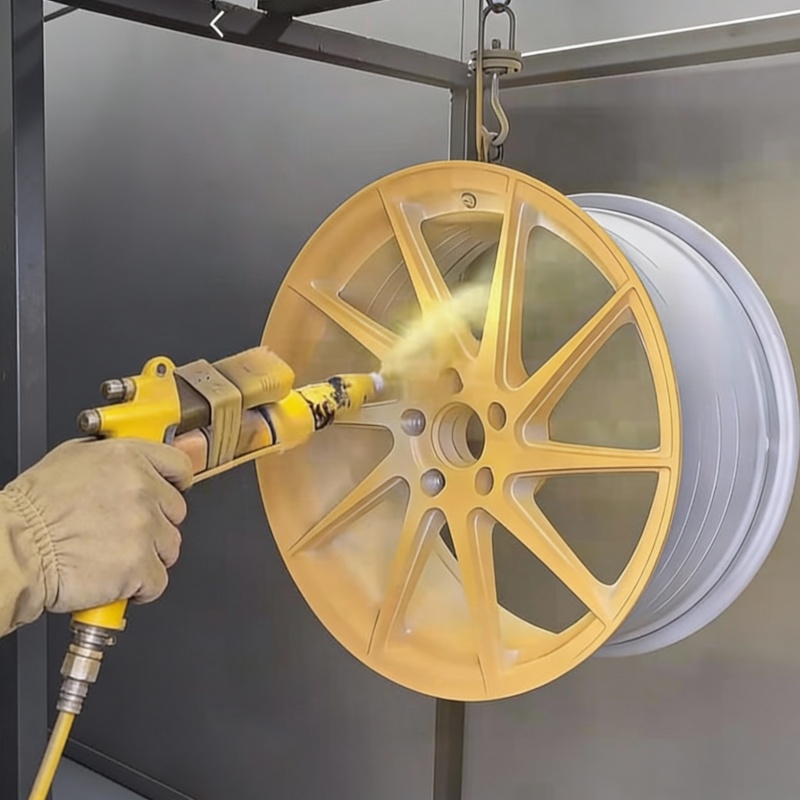
In the evolution of powder coating technology, balancing "low-temperature curing" with "storage stability" has long been recognized as a significant technical challenge. Behind this seemingly simple requirement lies a precise and intricate chemical interplay. Today, we will delve into the nature of this technical challenge and provide a systematic solution.
In the evolution of powder coating technology, balancing "low-temperature curing" with "storage stability" has long been recognized as a significant technical challenge. Behind this seemingly simple requirement lies a precise and intricate chemical interplay. Today, we will delve into the nature of this technical challenge and provide a systematic solution.
I. Why is "Balance" More Important Than "Extreme Performance"?
Energy Savings Translate to Real Cost Savings, But Only If the Product is "Usable"
Against the backdrop of "Dual Carbon" goals, energy consumption in coating lines has become a highly sensitive cost factor for customers. Engineering experience shows:
For every 10°C reduction in the curing temperature of powder coatings, overall energy costs can decrease by approximately 10%–15%.
For customers with massive powder consumption, such as in radiator, shelving, and home appliance manufacturing, the annual energy savings from low-temperature curing often exceed the price difference of the powder itself. However, this holds true under one essential condition: the powder must remain stable under actual production, transportation, and storage conditions.
The Demand for Low Temperatures Stems from Real Application Scenarios
Traditional curing conditions of 180°C/10min are increasingly limiting a wide range of applications:
Substrates like MDF (Medium-Density Fiberboard) can degrade or crack above 150°C.
Pre-assembled components containing PA66, rubber, or other materials are prone to aging and deformation.
Heavy castings require higher oven temperatures to reach the target part temperature, increasing both energy consumption and the risk of yellowing.
Low-temperature curing is a clear trend, but if stability cannot keep pace, the trend cannot be realized.
The Industrialization Threshold: 40°C Storage Stability
Many low-temperature formulations perform well in the lab but fail under summer storage conditions.
The fundamental reason is:
The easier a system reacts at low temperatures, the more prone it is to "premature reaction" at ambient temperatures.
If this issue cannot be resolved through engineering design, low-temperature powder will remain confined to the laboratory.
II. Defining the Goal: What Constitutes "True Balance"?
Before discussing technical pathways, a critical fact must be acknowledged:
Low-temperature curing powder coatings are not about pursuing a single extreme parameter, but rather a combination of "minimum acceptable benchmarks."
Taking a typical epoxy/polyester (Hybrid) system as an example, the commonly accepted engineering targets in the industry include:
Curing Condition: 140°C × 15 min (actual part temperature)
Gel Time (180°C): 80–120 s (fast yet with sufficient flow window)
Impact Strength: ≥ 50 kg·cm (avoiding "under-cure")
MEK Rub Resistance: ≥ 50 double rubs without substrate exposure
Storage Stability: No significant caking after 40°C × 30 days
Among these, storage stability holds veto power.
III. Three Technical Pathways to Achieve Balance and Their Boundaries
Solution A: High-Activity Resin Driven (Robust Type)
This approach increases the acid value (AV) of the polyester to raise the number of reactive sites on the molecular chain, enhancing reaction probability from the resin side.
Advantages: Relatively controllable storage stability; stable mechanical properties.
Limitations: Higher-cost high-AV resins; limited options. Suitable for applications with higher stability requirements and acceptance of moderate cost increases.
Solution B: Strong Catalyst Driven (High-Risk Type)
This relies heavily on accelerators like imidazoles or organic phosphines to forcibly lower the reaction activation energy.
Advantages: Low cost; minimal changes to existing resin systems.
Risks: High risk of caking in summer; potential premature gelation during extrusion. This pathway is only suitable for scenarios with immediate use and extremely low storage requirements.
Solution C: Latent/Microencapsulated Catalyst (Performance Type)
This physically or chemically isolates the catalyst, releasing its activity only at elevated temperatures.
Advantages: Enables even lower curing temperatures (130°C or below) with excellent storage stability.
Trade-offs: High cost; may affect appearance and processing window. Suitable for high-end or special applications.
A truly mature low-temperature curing powder coating is not defined by who can push the temperature the lowest, but by who can establish a long-term, reproducible balance between performance, stability, and cost.
In the wave of green transformation in manufacturing, coating companies that master this art of balance will not only create significant economic value for customers but also secure a leading position on the path of technological innovation. Every reduction in temperature expands the boundaries of materials science; every enhancement in stability reinforces the commitment to quality in industrial production.
About China AAB Group
China AAB Group is a global leader in specialty chemicals and high-performance materials solutions. We are committed to solving our customers' most critical challenges through sustainable innovation, providing value-added services for surface treatment, industrial manufacturing, and other sectors to jointly shape a better future.
Contact the AAB team today to request samples and detailed technical solutions, and experience the transformative power of low-temperature curing technology!
Manager: Bruce
Email: info@aabindustrygroup.com
WhatsApp:+86 13951823978
Contact: Bruce Wang
Phone: +86 13951823978
Tel: +86 025-58895705
Whatsapp: +86 13951823978
Email: bruce@aabindustrygroup.com
Add: No. 614, Building 01, Hongyang times business center, Jiangbei national New District, Nanjing, Jiangsu Province 210000
We chat